Product & interaction design · 2024
PixelPact
A collaboration platform prototype for designers looking for collaborators and real projects.
Opportunity
Help creatives make the work, not just display it.
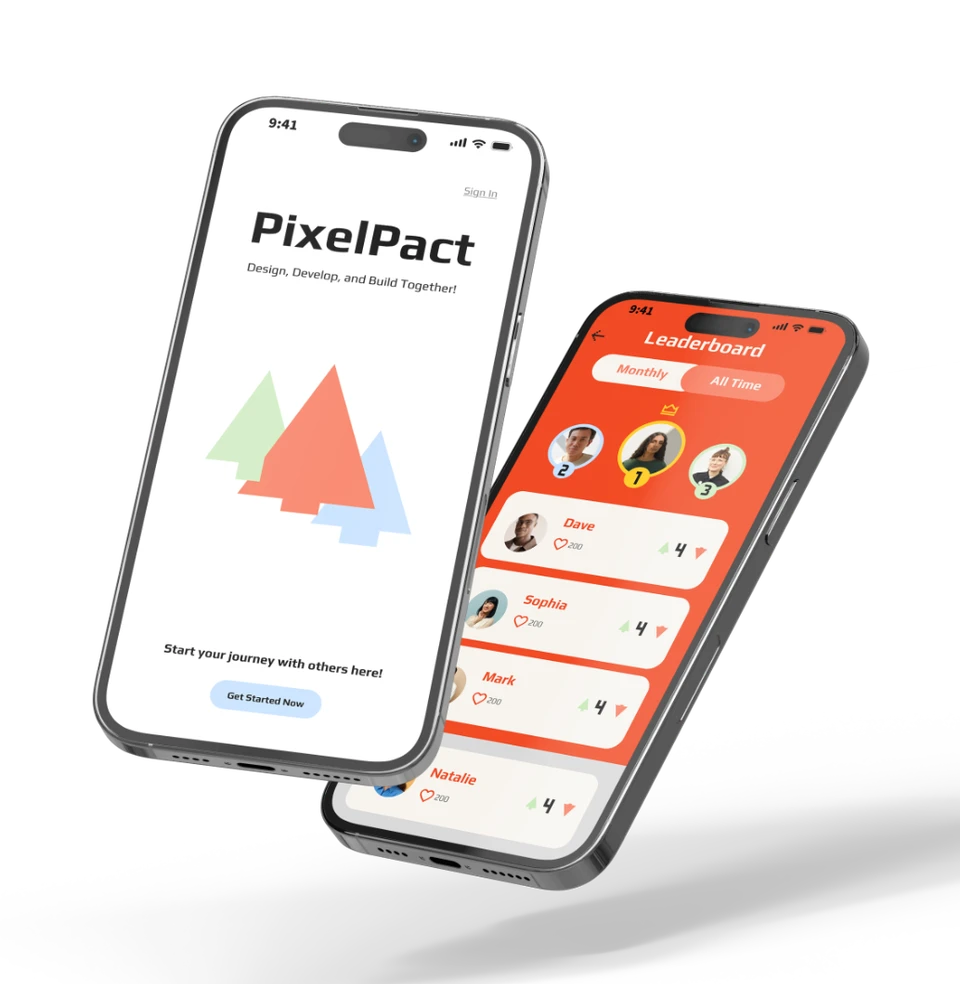
PixelPact explores how designers looking for collaborators and real projects can find people, form teams, and follow work through to submission. The challenge is not simply presenting a portfolio. It is connecting the conversation about a project to the decisions and actions needed to complete it. The result is a collaboration prototype, not a released platform. My contribution focused on the home page and the chat/messaging page.
System
Communication came first.
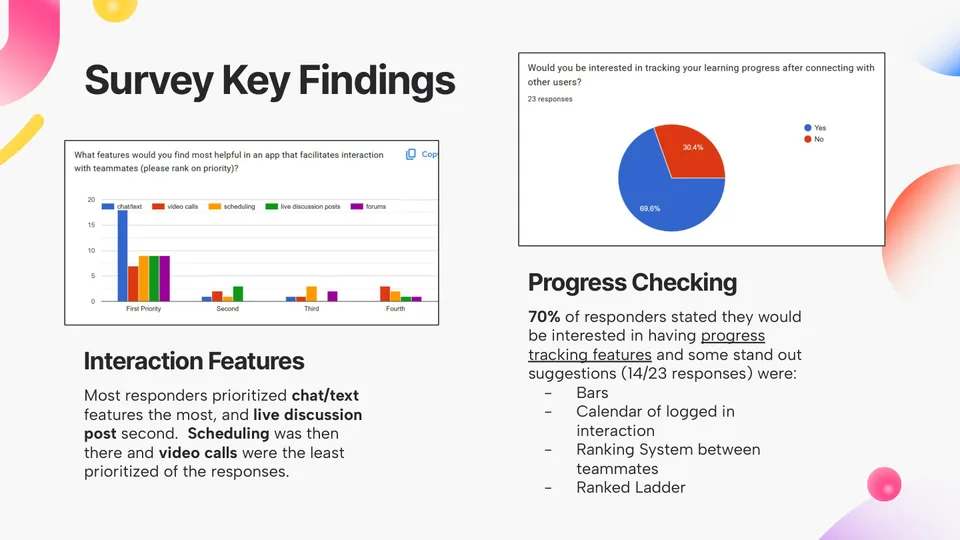
In a survey of 23 participants, 21 expressed interest for personal creative work and 18 for career advancement. Chat and live discussion ranked above video and scheduling. Those priorities informed a shared-workspace approach: communication sits alongside team roles, deadlines, and progress rather than becoming a separate destination. The survey describes preferences in this research group, not demand across all designers. My interface work focused on the home page and chat/messaging page, connecting the project overview with the conversations people need to move their work forward.
Flow
From finding a team to sharing the work.
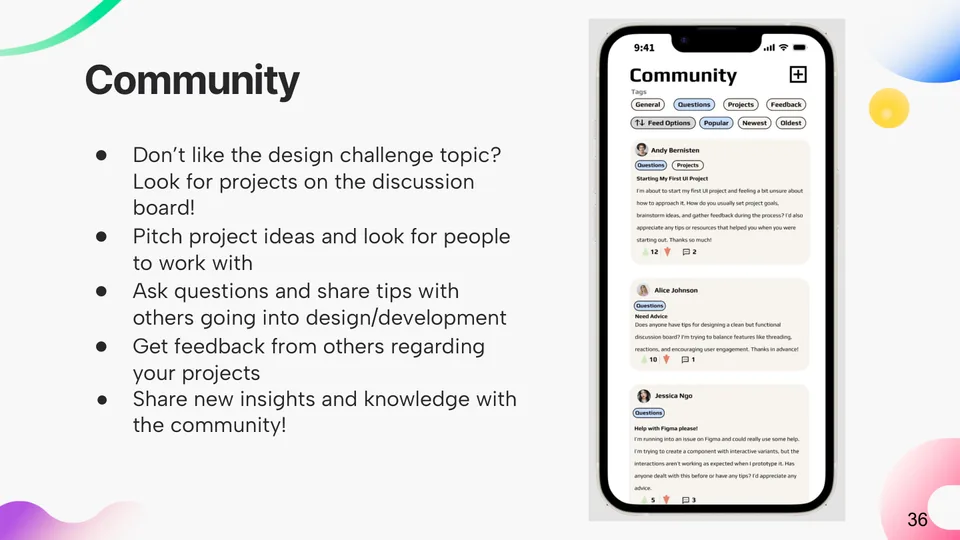
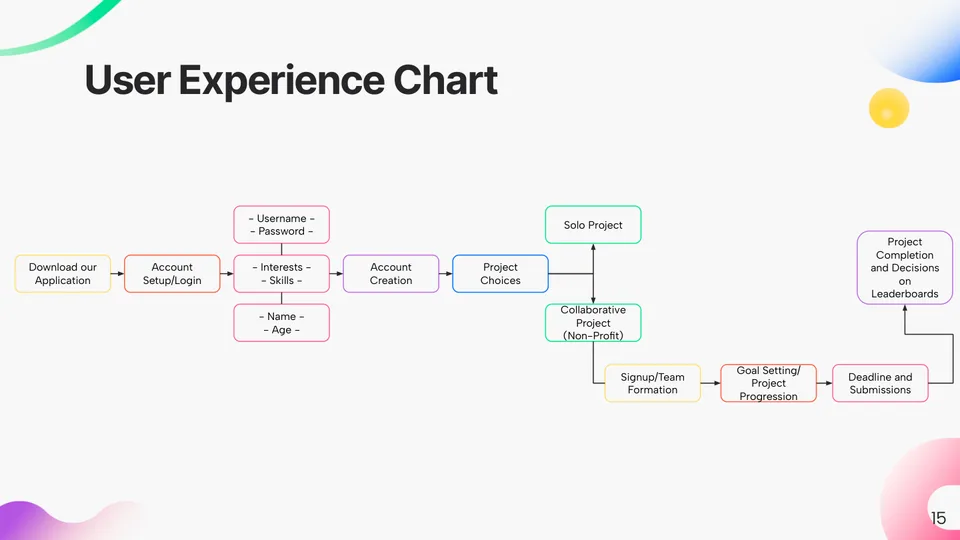
The flow connects profiles, project selection, team formation, goals, and submission. Team conversations belong to the active project, while community discussion provides a separate place for feedback. The screens show how these spaces relate without claiming that the prototype has a deployed messaging service.
Decisions
Prioritize conversation and visible active work.
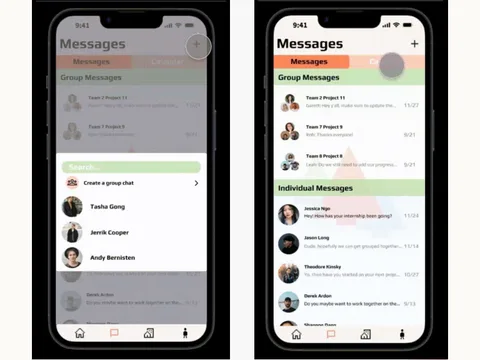
Communication first: the survey ranking supported chat and live discussion ahead of video and scheduling. Make active work easier to find: usability sessions surfaced navigation confusion, incomplete content states, and unclear relationships between community and team spaces. The team simplified navigation and clarified team actions and progress. These are documented design responses, not a measured increase in completion rates. I worked on the home page and the chat/messaging page. The research and testing counts describe the team project, not individual ownership of every study or screen.
Outcome
A focused collaboration prototype.
More than 15 usability participants contributed to the iteration. The prototype connects team formation, communication, progress, and submissions in one product flow. It shows a direction for collaboration and the usability issues that shaped it; it does not establish adoption, retention, or commercial results.
My contribution
I worked on the home page and chat/messaging page as the UX and interaction designer within a five-person team. The broader research and testing results belong to the team project.