Fast under pressure
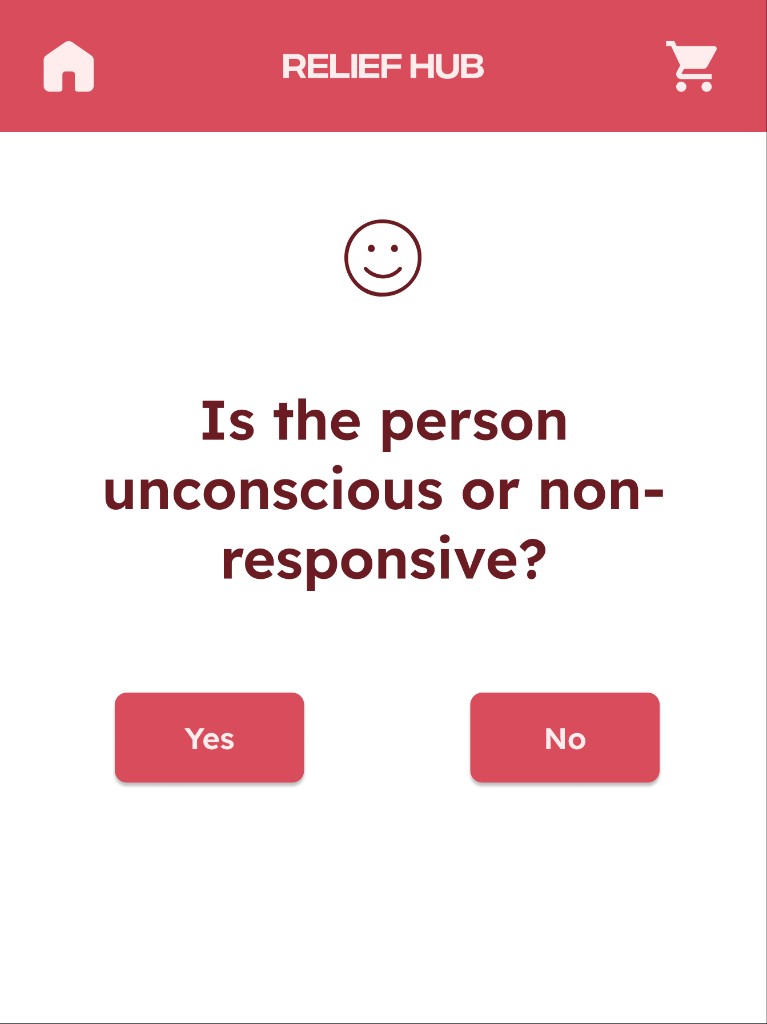
Large targets and short decision paths reduce hesitation in stressful environments.
05 / Physical + digital experience · 2025
A connected kiosk and tablet experience designed to help people find appropriate first-aid supplies without leaving an entertainment venue.
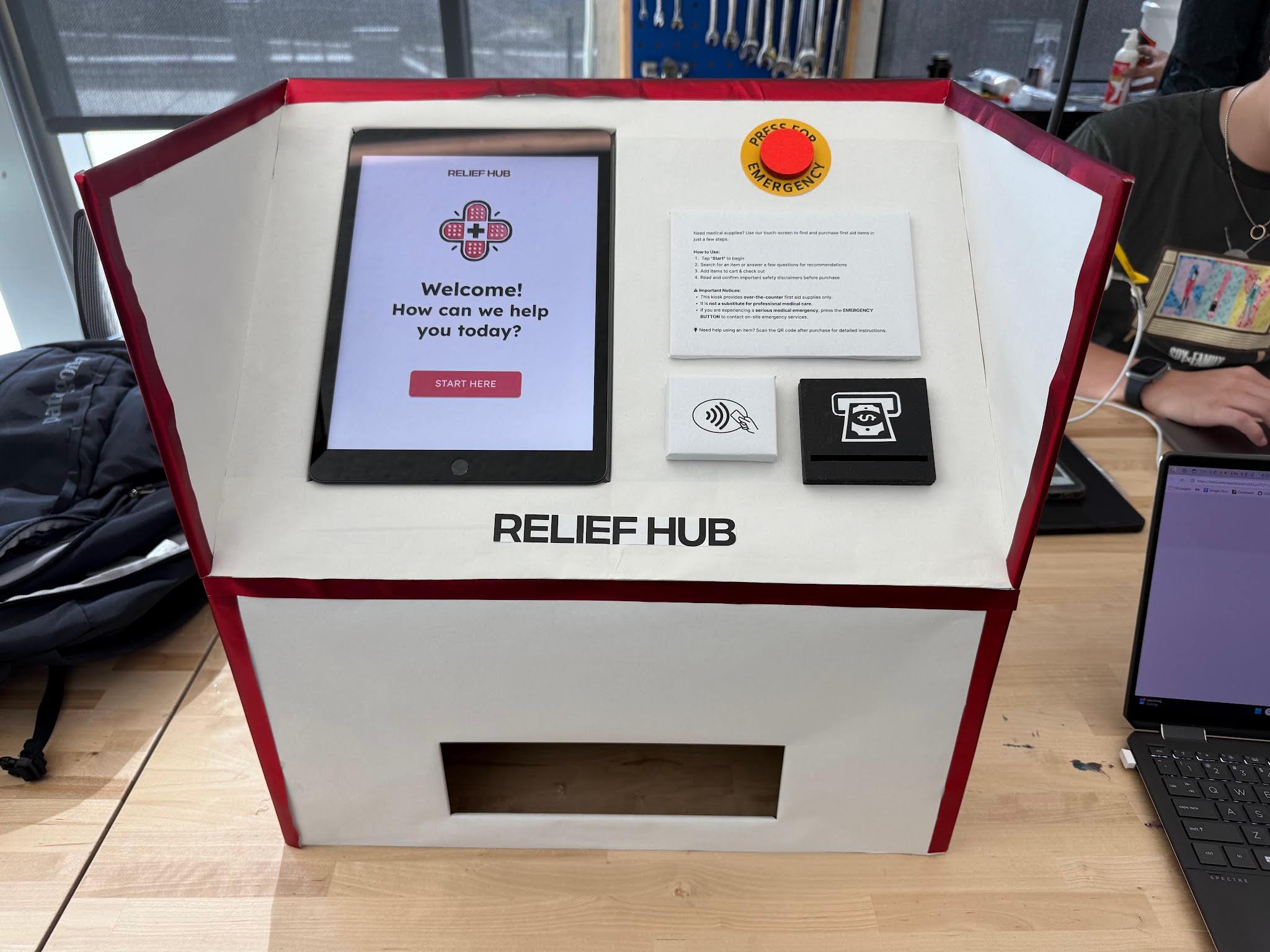
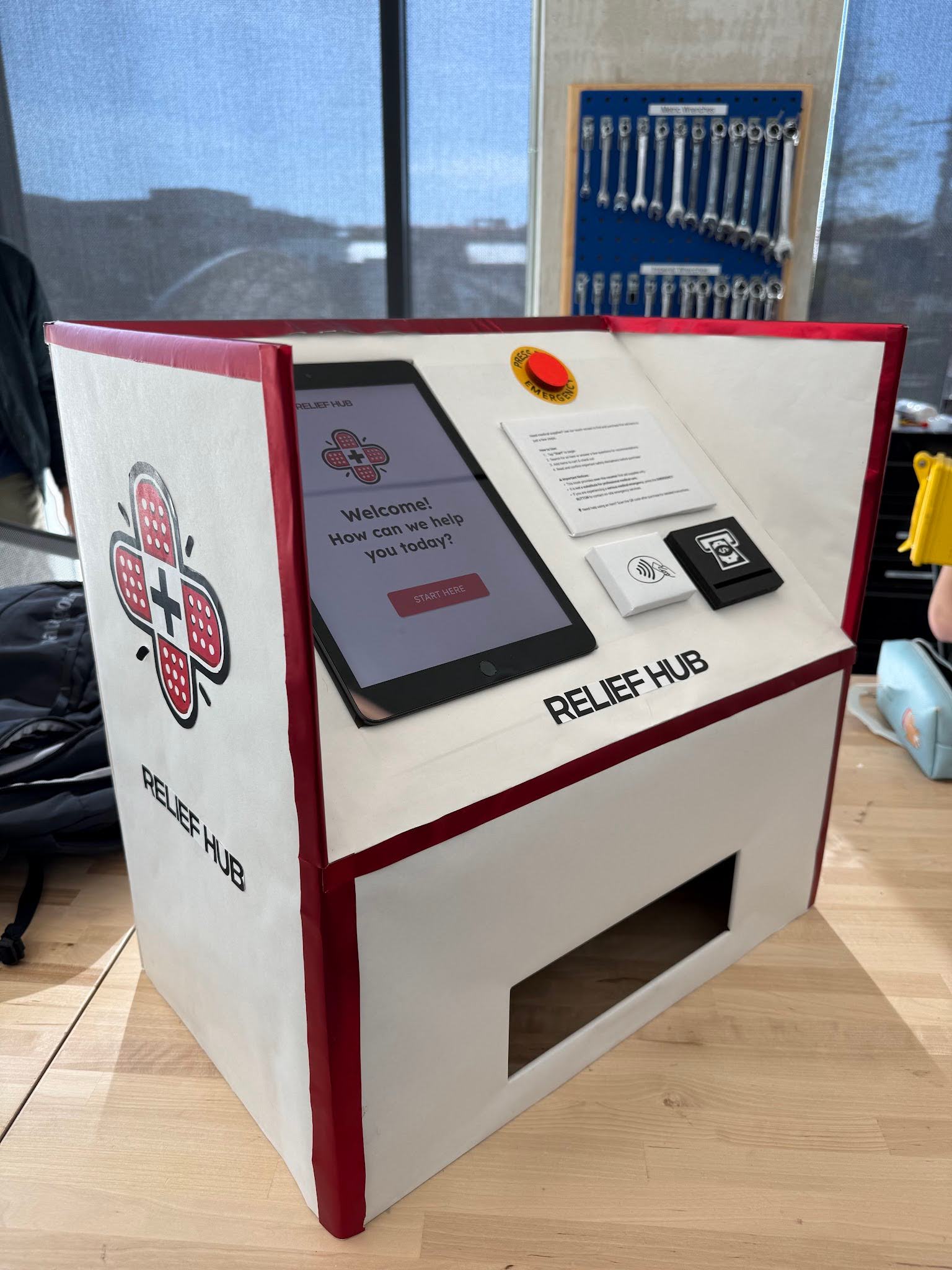
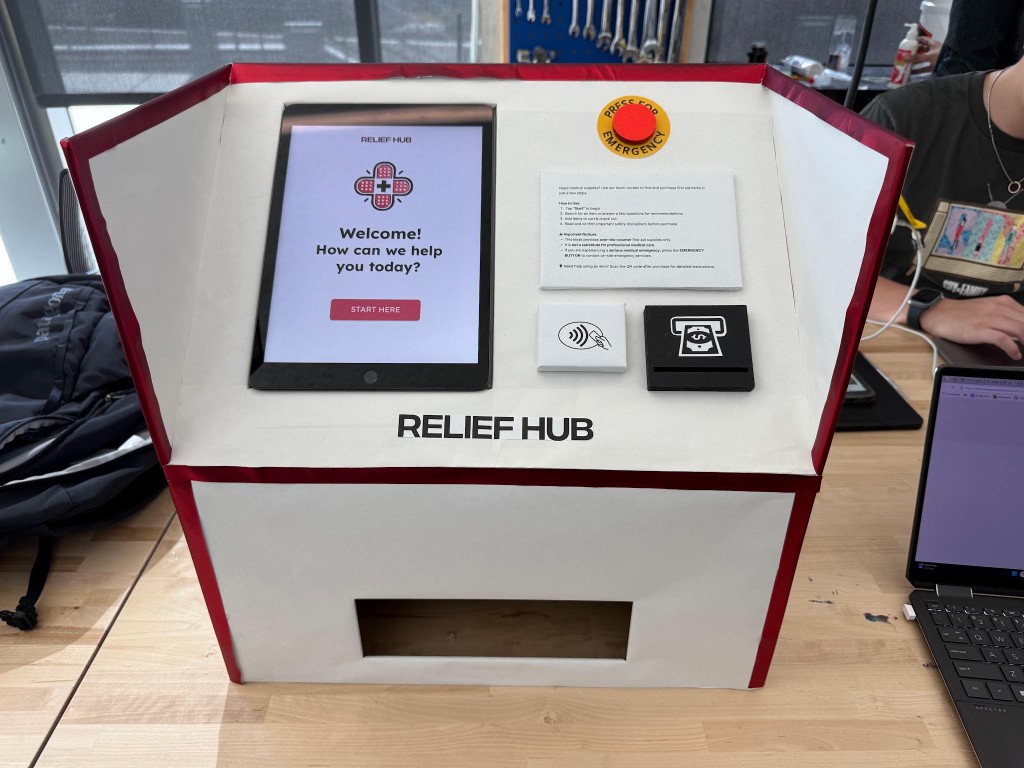
Final system prototype A full-scale proof of concept combining guided touchscreen shopping, payments, emergency access, and physical dispensing.
The opportunity
At concerts, festivals, and other crowded events, minor injuries can become frustrating fast. Research with approximately 30 participants revealed a clear market need for faster, more accessible first-aid support at entertainment venues. ReliefHub responds with an experience that helps people identify and purchase common supplies while directing true emergencies to immediate help.
Large targets and short decision paths reduce hesitation in stressful environments.
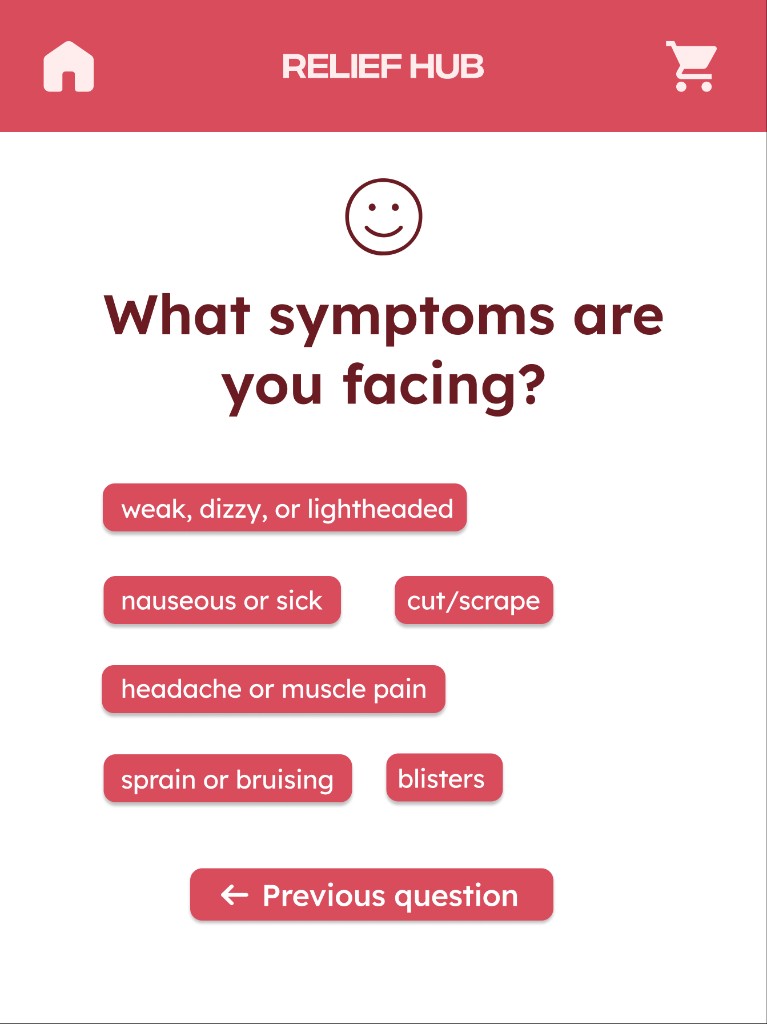
The questionnaire recommends general supplies while keeping medical boundaries clear.
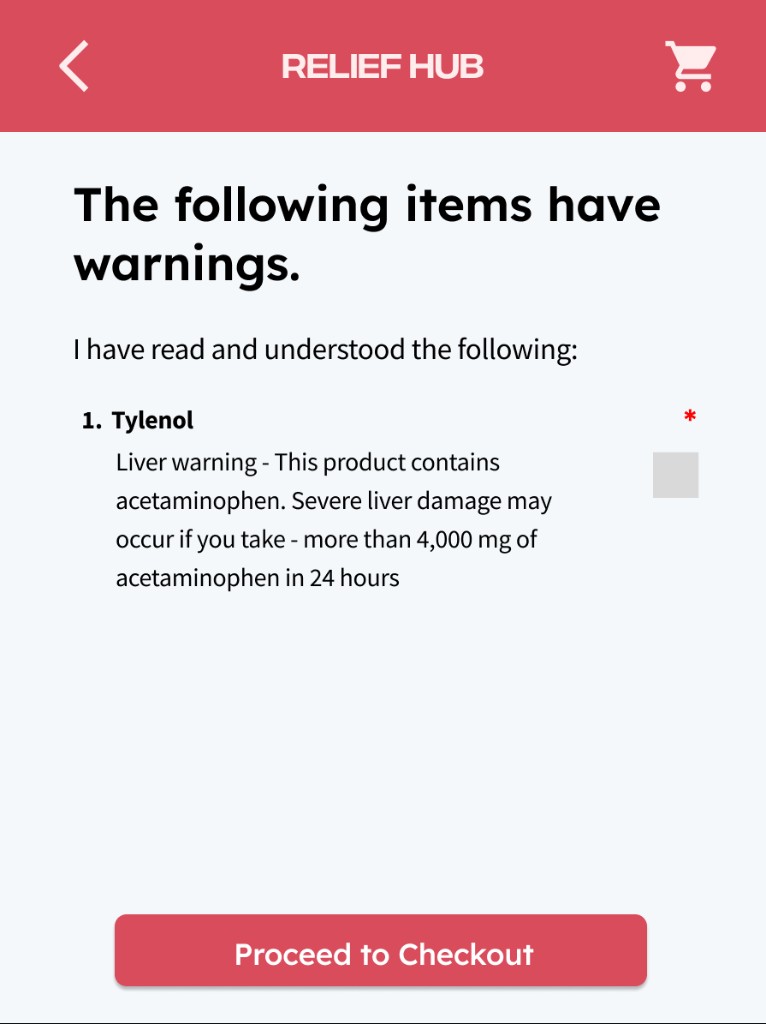
Product warnings and an emergency button stay visible before a purchase is completed.
The complete system
The physical kiosk establishes visibility, reach, payment, and dispensing. The tablet interface handles the decision-making journey. Every touchpoint was designed to support the same goal: get the right item into a user's hands with minimal uncertainty.
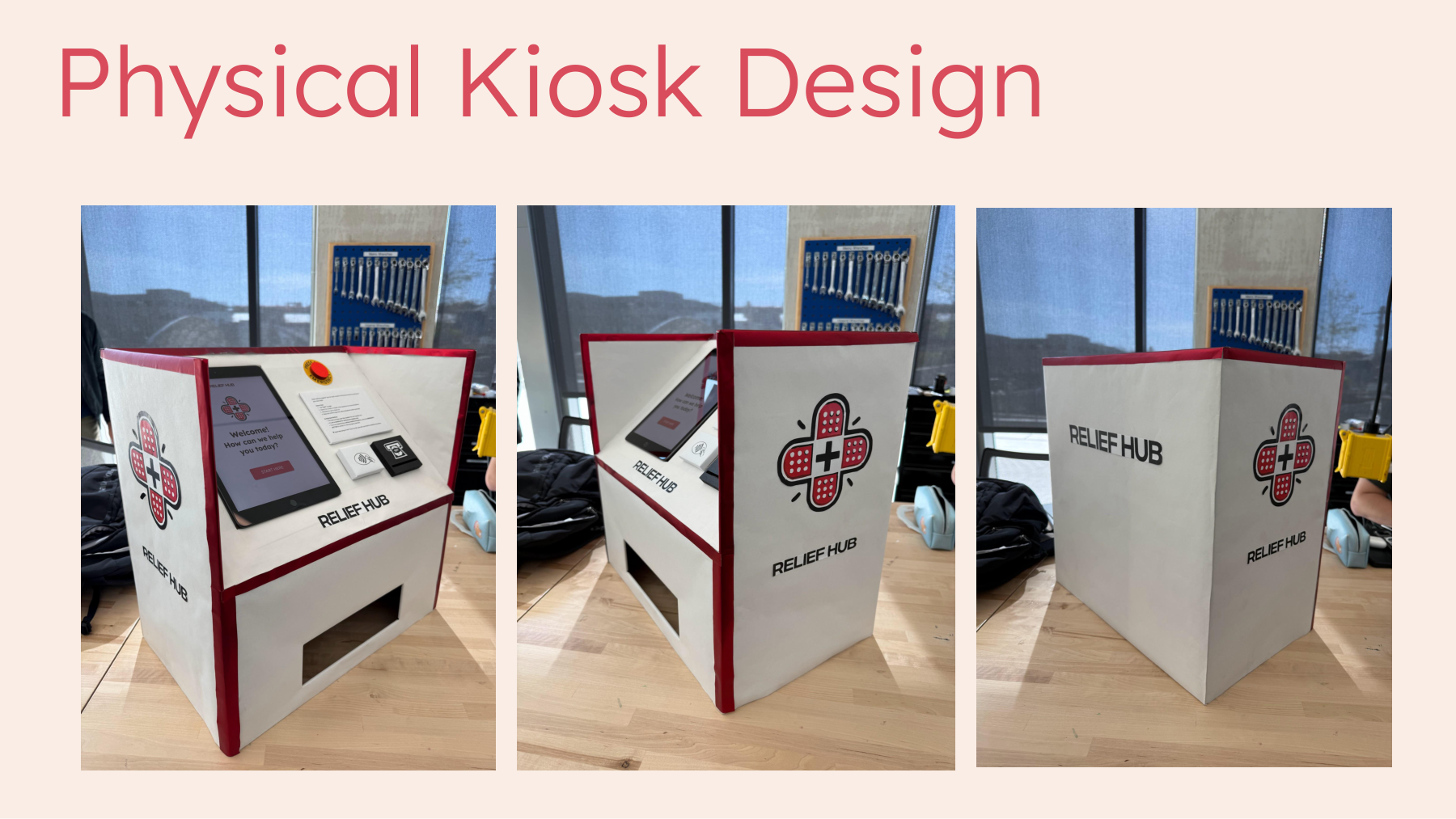
Experience architecture
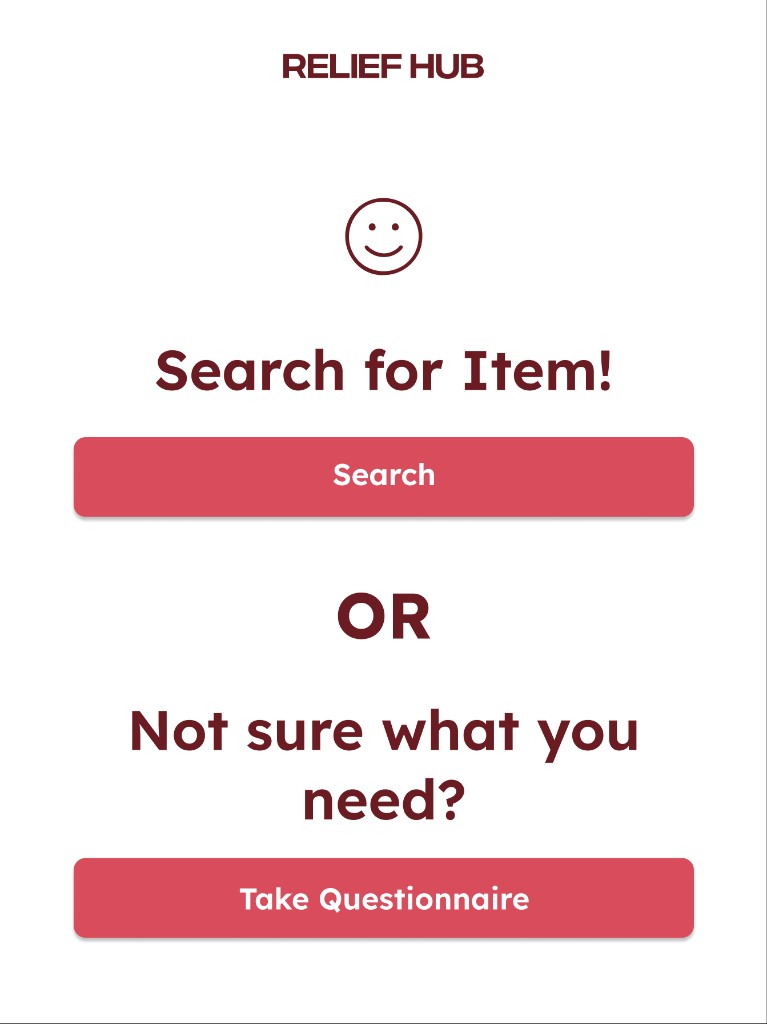
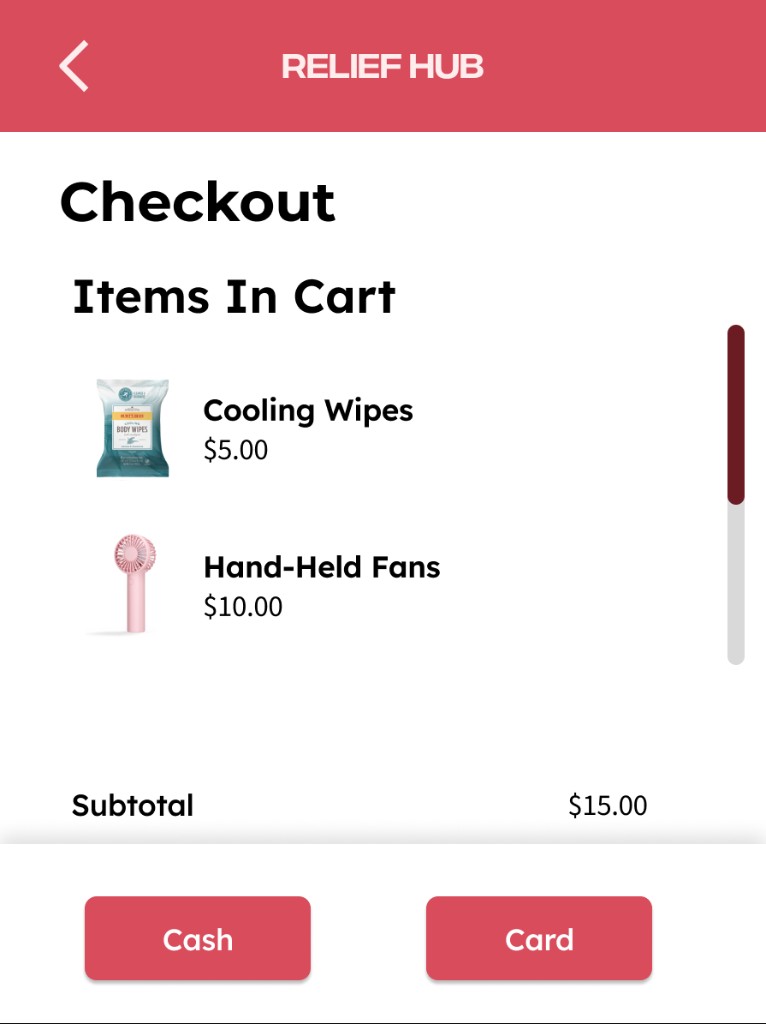
The flow branches early: users who know what they need can search directly, while uncertain users answer prompted questions. Both routes converge on product details, cart review, required safety warnings, payment, and item-specific instructions.
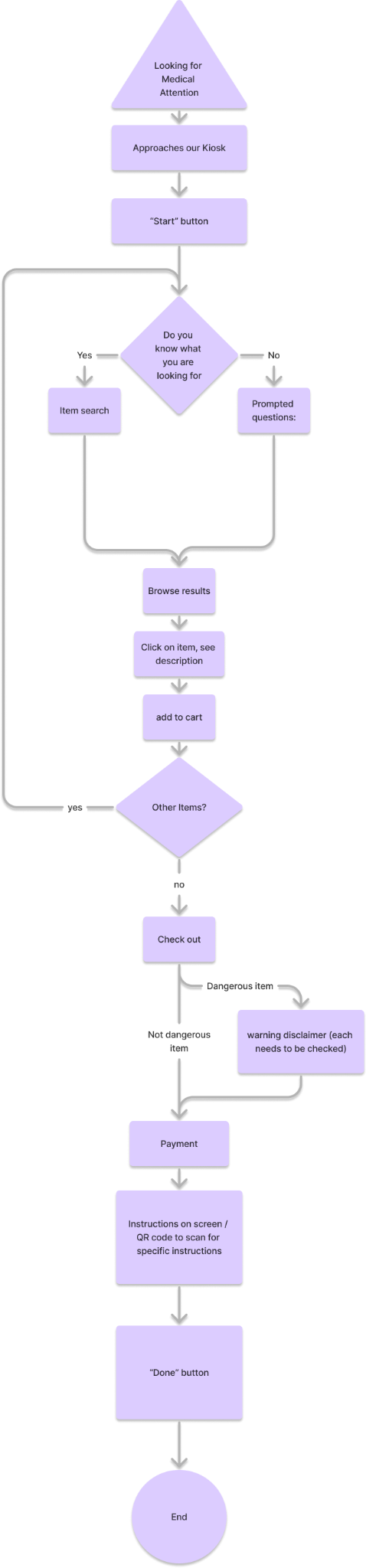
Core experience
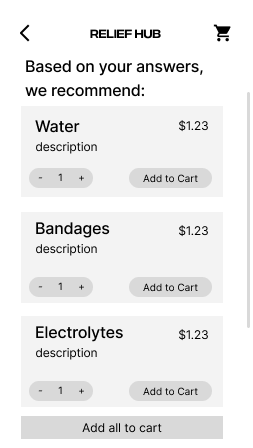
Users can search for a known item or answer a short symptom questionnaire. Both routes converge on recommendations, safety information, and checkout.
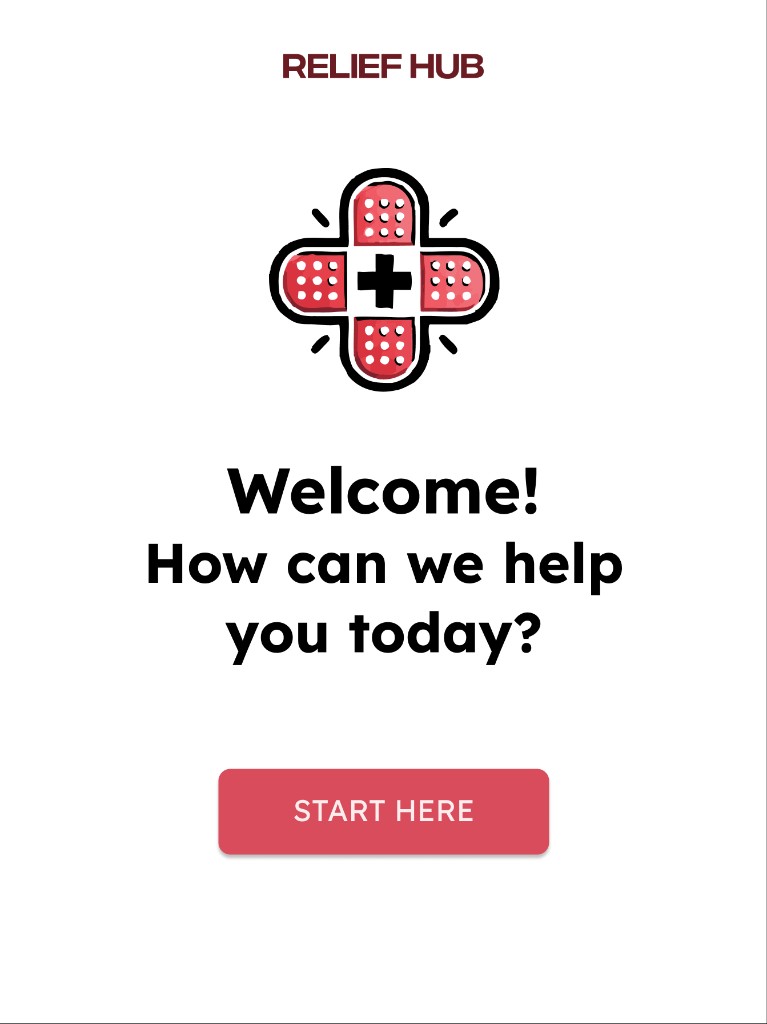
Key interaction decision
Before payment, ReliefHub surfaces dosage and allergy warnings that must be acknowledged. This adds a deliberate pause at the moment where speed should give way to safety.
Physical prototyping
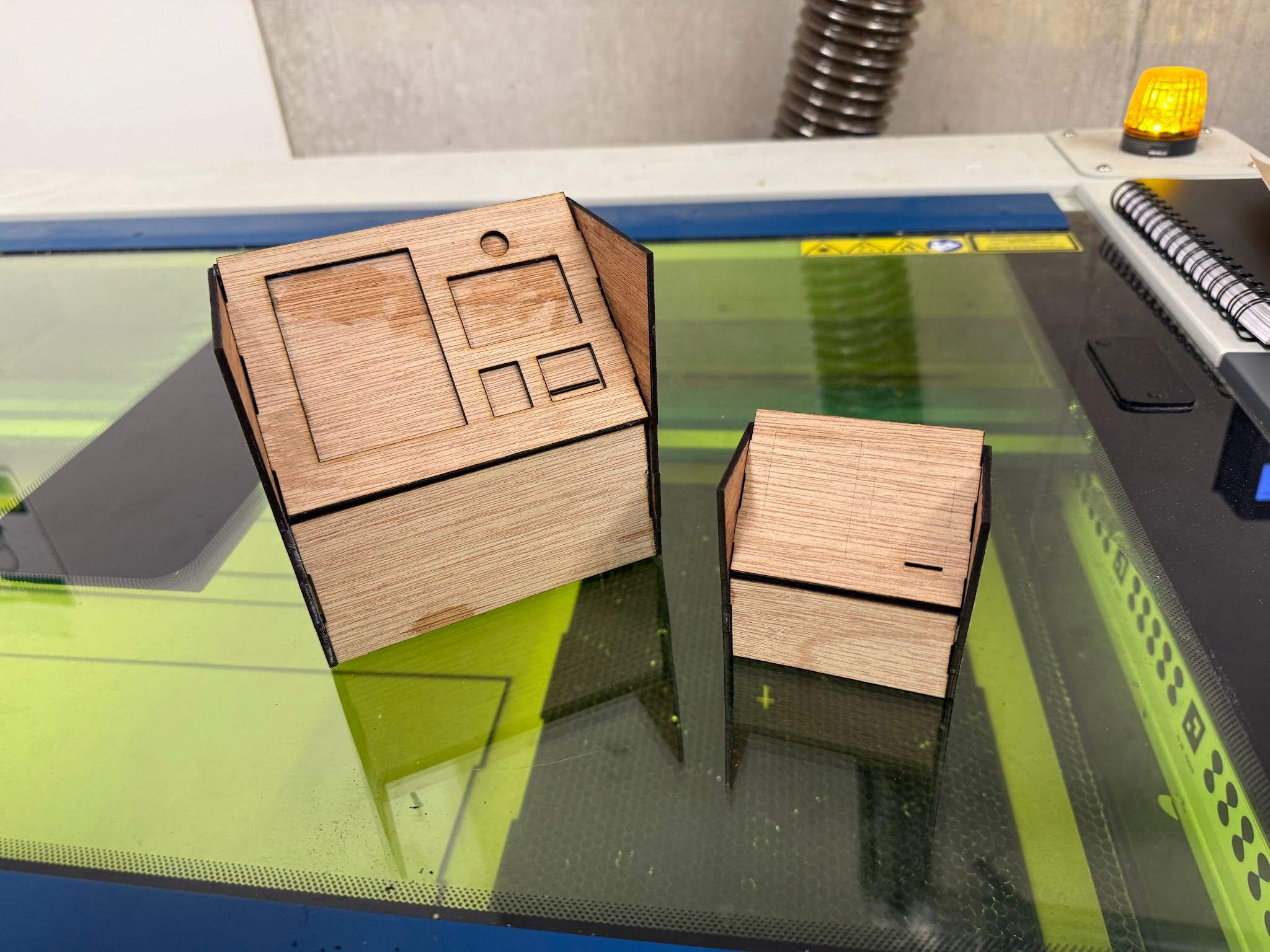
Small laser-cut form studies helped the team resolve screen angle, reach, payment placement, and dispensing access before committing to the full-scale build.
The outcome
Testing with 10+ users helped validate the connected journey, while insights from roughly 30 participants indicated meaningful demand for on-site access to first-aid products. The final prototype integrated a touchscreen, contactless and cash payment touchpoints, an emergency button, safety guidance, and a dispensing bay—making the complete service tangible and testable.
Explore the interaction
Open the ReliefHub Figma prototype↗Next project
San Diego Design Week